

What is an ACL Sprain?
An ACL sprain (torn ACL) is a tear of the anterior cruciate ligament in the knee joint. They are either partial tears or full tears (ruptures) where the ligament is torn completely.
Our full ACL rehab program takes you step-by-step from initial injury to full fitness.
Medically reviewed by Dr Chaminda Goonetilleke, 21st Dec. 2021
Torn ACL symptoms
In most cases, if you have a torn ACL, you will be aware that something serious has happened. Symptoms include:
- Sudden, acute knee pain
- An audible pop or crack at the time of injury
- Rapid swelling (but not always)
- Knee feels warm to the touch.
- An unstable knee, if you are able to walk
Assessment & diagnostic tests
Your physio or doctor uses assessment tests to help diagnose your ACL sprain. These include the Anterior drawer test, Pivot shift test and Lachman’s test.
Key diagnostic questions for an ACL tear include: Did you hear a pop at the time of injury? Did swelling occur rapidly within two hours? Have you experienced the knee giving way? Have you lost motion in the knee? Do you feel pain when pivoting? Did the injury occur after a sudden pivot, twist, or awkward landing?
Imaging
An MRI scan confirms the diagnosis. However, an X-ray is only useful for detecting associated bone injuries such as an avulsion fracture (where the ligament pulls a small piece of bone away with it).
ACL Sprain anatomy
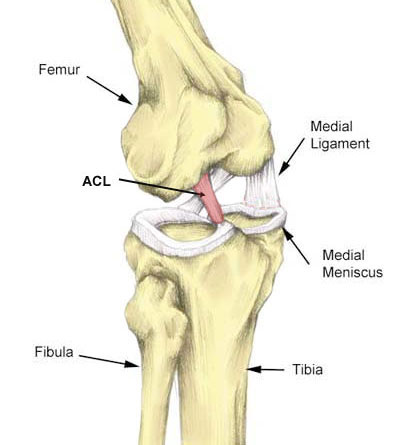
The anterior cruciate ligament runs diagonally across the knee. It originates from the back of the femur (thigh bone) and attaches to the front of the tibia. Its function is to prevent the tibia (shin bone) from moving excessively forwards.
Causes & Mechanism
Injuries to the ACL usually occur as a result of a twisting force in the knee, or if your tibia (shin bone) is forced forwards. Twisting happens when landing after a jump for example. The foot is planted on the ground, whilst the knee twists inwards.
A direct blow to the outside of the knee causes it to buckle inwards. This causes excessive movement of the tibia (shin bone) resulting in damage to other structures within the knee, as well as a torn ACL.
Skiing is also a common cause of ACL sprains. The tips of the skis dig into the snow forcing the tibia forwards.
Emergency First Aid & Treatment for ACL sprains
Immediate first aid: involves applying the P.R.I.C.E. therapy principles (protection, rest, ice, compression, and elevation) to reduce pain and swelling. Apply a cold compression wrap for 15 minutes every hour or so for at least the first 72 hours. Or until you have had the knee assessed by a professional therapist or doctor. Do not apply ice directly to the skin as it may burn.
Wear a knee support: a hinged knee brace has solid metal supports down the sides to give extra support to protect the ligaments. It is not possible to brace, tape, or support the knee to completely prevent injuries.
Knee taping: The aim of using a brace or ACL taping is to support the knee following injury and to make the athlete feel more confident to move around. Taping is important if your knee is unstable as it will help protect other structures (ligaments and cartilage). Do not tape if you are unsure of the injury, or the purpose of taping the knee. This can sometimes give you a false sense of security and you may damage the knee even more.
When should I see a doctor or medical professional?
Red flag signs for an ACL tear include large swelling within two hours, inability to bear weight, and recurrent episodes of the knee giving way. If you believe that you have a suspected ACL injury or tear, you should seek professional advice as soon as possible. However, it may not be possible to diagnose your ACL sprain until the swelling has gone down. This is because it is difficult to move or examine the knee joint when it is badly swollen and painful.
If you experience symptoms such as a popping sound at the time of injury, severe pain, rapid swelling, instability or inability to bear weight on your leg, it’s crucial to consult with a healthcare professional immediately. Persistent knee instability, difficulty in walking, or recurring pain after the initial swelling subsides also warrant a visit to a doctor. Early diagnosis and intervention can prevent further damage and facilitate a more effective recovery plan.
Do I need Surgery for my ACL Sprain?
The decision to have ACL surgery depends on several factors. Doctors and physiotherapists assess the severity of the tear, with complete ruptures more likely to require reconstruction. Knee stability is a key consideration, as persistent giving way during daily activities or sports increases the likelihood of surgery. Activity level and goals are also important; athletes or active individuals often need surgery to safely return to pivoting or high-impact sports, while less active people may manage well with physiotherapy and bracing.
Other considerations include the presence of additional injuries such as meniscus or cartilage damage, the patient’s age, and how well the knee responds to rehabilitation. If function and stability are restored with structured rehab, surgery may not be necessary. However, if instability remains or the patient wishes to return to demanding activities, surgical reconstruction is usually recommended.

