
ACL SPRAIN REHABILITATION
A Step-by-Step Rehab Program by Elite Level Sports Physiotherapist Phil Pask.

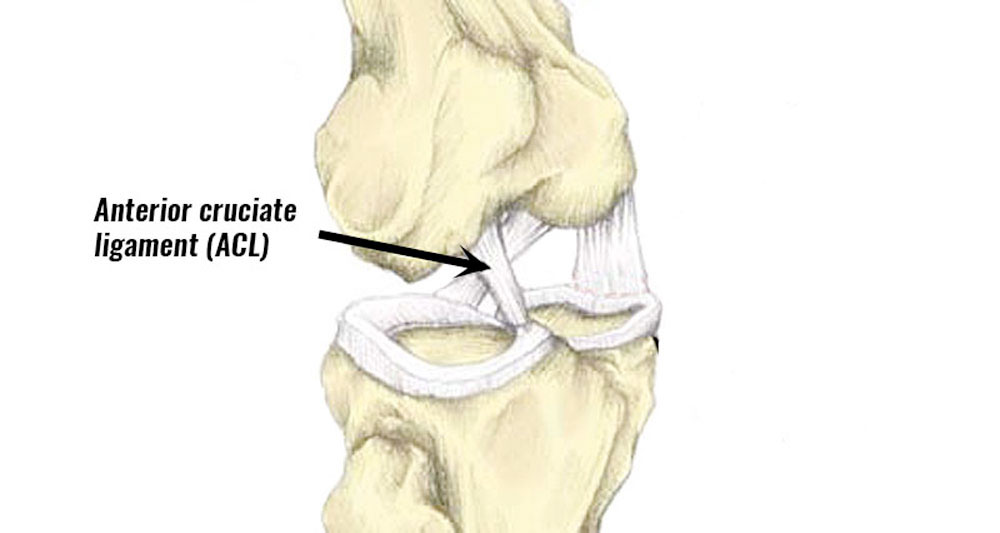
What is an ACL Sprain?
An ACL sprain is an injury to the anterior cruciate ligament in the knee. Symptoms often include sudden, sharp pain with an audible “pop” at the time of injury. Swelling, instability, and difficulty bearing weight are also common. These injuries can be slow to heal and leave athletes worried about re-injury. That’s why structured rehabilitation is vital. Our program guides you step by step — from early recovery to rebuilding strength and stability — helping you return to sport with confidence.
Cure My ACL Sprain
Our step-by-step rehabilitation app is designed to fix it – for good!
Why Structured Rehabilitation Is Essential
ACL sprains are serious knee injuries with a high risk of recurrence if rehab is incomplete. Recovery requires restoring knee stability, strength, and control through progressive phases. Our program is criteria-based, meaning you advance only when milestones are achieved, with progress tracked at every stage.
Is it suitable for me?
This ACL sprain program is designed for anyone with mild to moderate ACL sprains who has not recently had surgery. It’s based on proven recovery methods Phil uses with professional athletes, adapted into a step-by-step plan for anyone. If you’re recovering from surgery, always follow your surgeon’s guidance, as suitable exercises in the early stages depend on your specific procedure.
To access the full program, view our subscription plans.
“Trusted by physiotherapists who have worked with Premier League players and England Rugby.”
Program Author
Phil Pask
Phil is one of the world’s most experienced sports physiotherapists. He has worked with the England Senior Rugby Team since 1997, continuing in recent years as Consultant Physiotherapist.
Before that, he spent over 15 years at Northampton Saints as a player, physiotherapist, and Head of Performance, giving him unrivalled expertise at the very highest level of professional sport.

How does it work?
The program consists of 4 phases. You progress through the phases, moving on to the next phase when you have reached specific exit criteria. Phil introduces each phase and guides you through the program via a series of videos.
Each phase is introduced by Phil through guided videos, showing you exactly what to do each day. Your progress is tracked in the app and recorded for review by you, your coach, or your physio. This isn’t just recovery—it’s a pathway to coming back stronger than before.
Phase 1
Phase 1 begins as soon as possible after the injury and can last up to 2–3 weeks, depending on the severity (grade) of your injury. The main goals are to stop internal bleeding and control swelling.
By the end of this phase, you should be walking normally—without a knee brace and without any sense of instability. You should also be able to fully extend (straighten) your knee, with minimal remaining swelling.
Phase 2
The aim of Phase 2 is to eliminate any remaining swelling, restore full range of motion in both knees, and build the confidence to step up and down without pain.
Phase 3
The aim of phase 3 is to progress to a point where you can run at 75% of maximum speed and begin to perform simple agility drills.
Phase 4
The emphasis in phase 4 is on bridging the gap between rehabilitation exercises and full fitness. Don’t skip this phase because you are almost there. It is important, especially if you want to avoid setbacks later.
This is the stage where your knee can handle unpredictable, high-load, and high-speed movements and activities
What’s included?
The program includes the following:
Treatment & healing
This covers how and when to apply treatment such as cold therapy & compression, heat, massage, taping & bracing.
Stretching & mobility
These aim to maintain a normal range of movement in the ankle, knee, and hips. They begin early in stage one with simple active ankle movements and gradually progress to more dynamic hip mobility drills.
Activation exercises
These exercises maintain the hip abductor muscles (outside of the hip). It is important these muscles keep firing and stay in good condition ready for the demands later in the program.
Strengthening exercises
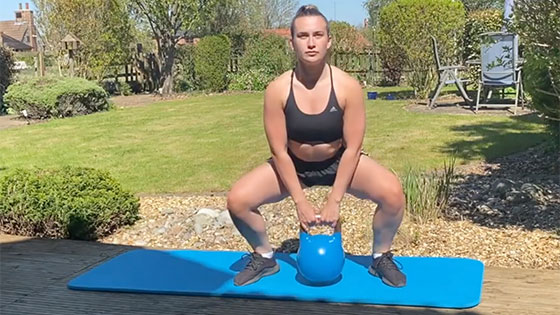
These exercises maintain and improving specific muscle strength around your knee joint. They begin with simple isometric exercises and become increasingly more demanding, with heavier loads and unpredictable movements.
Movement control exercises
These are proprioception-type exercises, aimed at improving your balance, control, and spatial awareness. Again, they start with simple balance exercises and progress to advanced balance board movements.
Functional exercises
Functional exercises bridge the gap between basic rehabilitation and sports-specific type drills. They begin with walking drills and progress through skipping-type sprint drills and agility training.
Got Questions? We’ve got answers.
How long does an ACL injury take to heal?
Recovery depends on severity. A mild ACL sprain typically heals within 6–8 weeks. A complete ACL tear requires surgery, followed by 9–12 months of structured rehabilitation before returning to sport.
What is the best treatment for an ACL injury?
Treatment depends on whether the ligament is partially sprained or completely torn. Some partial injuries can be managed with rehabilitation to restore stability. Complete tears often need surgical reconstruction. The SportsRehab app provides a progressive rehabilitation program with daily tasks, exercise videos, and physiotherapist-led guidance to support safe recovery.
When can I return to sport after an ACL injury?
Return depends on surgery, rehabilitation, and functional testing. Most athletes resume training after 9–12 months, but only once strength, balance, and confidence are restored. Returning too early significantly increases the risk of re-injury.
Does an ACL tear heal without surgery?
Partial ACL injuries can sometimes heal with structured rehabilitation. Complete tears rarely heal on their own but can occasionally be managed without surgery in less active individuals. Athletes usually require surgical reconstruction followed by rehabilitation.
Visit our full FAQ page for detailed answers about the programs and using sportsrehab.app
“Testimonials”
Best app for sports injury rehab! Everything you need to know (and more) to help you rehab from a plethora of sports injuries. Does exactly what it says on the tin. 5 stars. Thanks